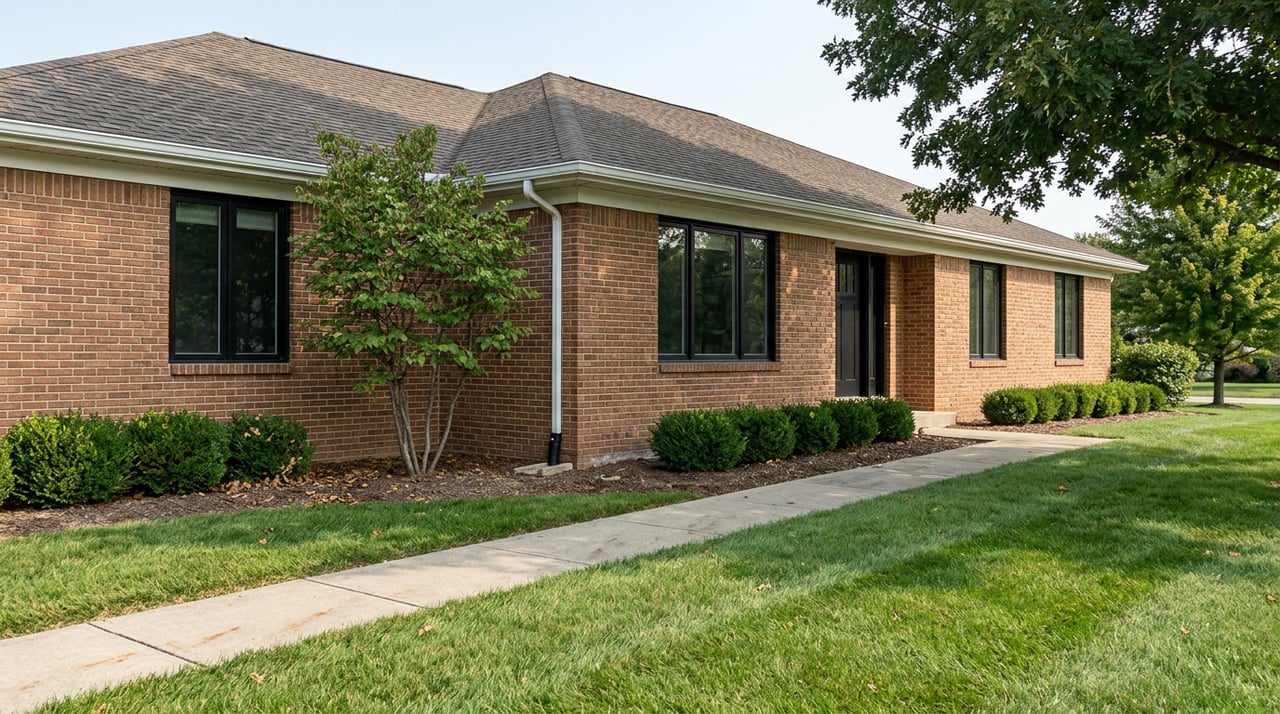
Two houses on the same Gassville street can close on completely different timelines, and the difference has nothing to do with square footage, roof age, or asking price. It comes down to a question most buyers do not think to ask until they are already under contract: does this parcel run on the city's water and sewer system, or does it depend on a private well and a septic tank buried somewhere in the yard?
That question sounds like a footnote. In practice, it is the variable that decides whether a Gassville closing moves in a single, predictable pass or stalls out waiting on lab results, a health department callback, and a lender who will not clear the file without them.
The Utility Map Doesn't Match the City Limits
Gassville runs its own municipal utility, and the city's Water Department, based at 204 S. School Street, handles both water and sewer service for properties inside its lines. New owners fill out a Customer Water-Sewer Agreement before service transfers into their name, and the city bills through its own online portal.
What the paperwork also reveals is that the boundary is not a single clean line. Gassville's utility office maintains a separate account category for what it calls a "Mountain Home Sewer Only" customer, meaning some parcels draw water from one system while their sewer service is billed and handled through Mountain Home instead. If you are buying or selling near that seam, you cannot assume the same utility covers both water and waste for a given address just because it sits inside Gassville.
Rates and connection fees are not fixed forever, either. Gassville's city council took up third readings on ordinances setting water rates, sewer rates, and water/sewer connection fees back in 2023, the kind of local governance that shows up in city council meeting coverage rather than on a listing sheet. Councils revisit these figures over time, so the number you find quoted somewhere online may not be the number in effect the week you close. The only reliable way to confirm current status and fees is a call to the city's Water-Sewer office directly.
Move outside those lines, roughly toward the edges of town, and the picture changes again. Arkansas as a whole leans on private systems more than most people realize. An estimated 40 percent of households statewide rely on septic or another onsite wastewater system rather than a municipal sewer connection, a reflection of how much of the state, including the Twin Lakes region, is built on land where running a sewer main was never practical.
What a Private System Actually Owes the Next Owner
If a Gassville property sits on private septic, selling it involves more than handing over keys. Arkansas's onsite wastewater rules are set at the state level through the Department of Health but administered county by county, so Baxter County's health unit is the office that holds permit records, fields questions from an Onsite Environmental Specialist, and processes the paperwork tied to a change in ownership.
Sources differ on exactly how automatic an inspection is at the moment of sale. Some describe a straightforward requirement: a septic inspection plus a completed Request for Permit Transfer whenever ownership changes hands. Others note there is no single statewide mandate forcing an inspection on every sale, only a standing recommendation to pump the tank every three to five years. What both agree on is that the permit itself has to move to the new owner's name through the county health unit, and in practice almost every financed sale ends up needing verification of a working system anyway, because lenders ask for it even when the state does not strictly require it.
The design standard behind that system matters too. Arkansas's health rules call for a minimum 1,000-gallon tank for a typical three-bedroom home. A system built to an older standard, or one installed before current rules took effect, can still function fine day to day and still raise a flag the moment someone official goes looking.
Here is a quick way to see how the three most common Gassville scenarios differ:
| Utility Situation | What It Means for a Sale |
|---|---|
| Full city water and sewer | Confirm current account status and any transfer fee with Gassville's Water-Sewer office; least added timeline risk |
| City water, Mountain Home sewer | Two utility accounts to transfer instead of one; confirm both before assuming service is straightforward |
| Private well and septic | Permit must transfer through Baxter County's health unit; lender-required testing likely applies regardless of state mandate |
Where a VA Buyer's Clock Starts Ticking
Given how many buyers in this market come through VA financing, this is where the utility question stops being a curiosity and starts shaping the actual calendar.
A VA loan does not disqualify a home for being on well and septic. The requirement is safety, not the source of the water or the destination of the waste. But VA underwriting attaches specific conditions to a private system that a conventional buyer on city service never has to think about. If the home draws from a private well, the water has to be lab tested for coliform, lead, bacteria, nitrates, and nitrites, and that test is only valid for 90 days from the date the local health authority runs it. Time it wrong against your appraisal schedule and you are paying for a second test.
The septic side works on a trigger system rather than a blanket rule. The VA appraiser does a visual check first, looking for surfacing effluent, standing water over the drain field, unusually lush vegetation, or a sewage odor. A full inspection by a licensed professional only becomes mandatory if the appraiser flags a concern, if the lender requires it as a standing condition, or if county or state rules require it outright. On a rural property, one of those three triggers is common enough that a buyer should plan on an inspection rather than hope to skip it.
The house passes or fails on its own terms. The utility line decides how many extra steps it takes to prove it.
The financial stakes are real if something does turn up. Replacing a full septic system runs anywhere from roughly $5,000 to $30,000 depending on the system type, the soil, and local permitting, a wide enough range that it changes the negotiation, not just the closing date.
The Timeline Cost of Finding Out Late
None of this is disqualifying. What it does is compress an already tight option period if it surfaces for the first time after a contract is signed. A buyer who assumed public utilities because the house sits inside Gassville can lose days scheduling a water test, more days waiting on lab turnaround, and additional time if the septic evaluation comes back with a repair list before the lender will clear the file.
For a seller, the version of this problem looks different but costs just as much. A buyer's financing contingency does not stop the clock while everyone figures out which utility account applies to the parcel, or while the county health unit locates a decades-old permit record. Every day spent identifying the system is a day not spent negotiating repairs or moving toward the closing table.
Get Ahead of the Line Before You List
The fix costs almost nothing and takes one phone call.
- Sellers on a Gassville address should confirm directly with the city's Water-Sewer office at (870) 435-6439 whether the parcel carries full city water and sewer, water only with Mountain Home sewer, or neither.
- Sellers on private systems should pull septic permit records from Baxter County's health unit before listing, not after an offer arrives, so the Request for Permit Transfer is already in motion.
- Buyers working with VA financing should ask about water source and sewage type in the first showing, then schedule any required well test as early in the contract period as the calendar allows.
FAQ
Does every home in Gassville have access to city water and sewer? No. Gassville operates its own municipal water and sewer utility for properties within its service area, and some parcels are billed for Mountain Home sewer service specifically while still on Gassville water. Properties outside those lines, generally toward the edges of town, commonly rely on private wells and septic systems.
Is a septic inspection legally required to sell a home in Arkansas? Sources describe this differently. Some frame it as a straightforward requirement tied to any transfer of ownership, while others note there is no single statewide inspection mandate, only a recommendation to pump every three to five years. What is consistent is that the septic permit itself must transfer to the new owner through the county health unit, and most lenders require some form of verification regardless of state rules.
How long is a VA well water test good for? A well water test performed for a VA loan is valid for 90 days from the date the local health authority completes it. If the appraisal or closing slips past that window, the test typically has to be redone.
A house is easy to evaluate from the driveway. What sits underground and which utility account it belongs to takes a phone call most buyers never think to make. If you are weighing a purchase or a listing anywhere in Gassville, the Buy Feliccia Team can help you find out where that line falls before it becomes a problem on your closing calendar. Schedule a consultation with Christopher Feliccia to talk through the specifics of your property.