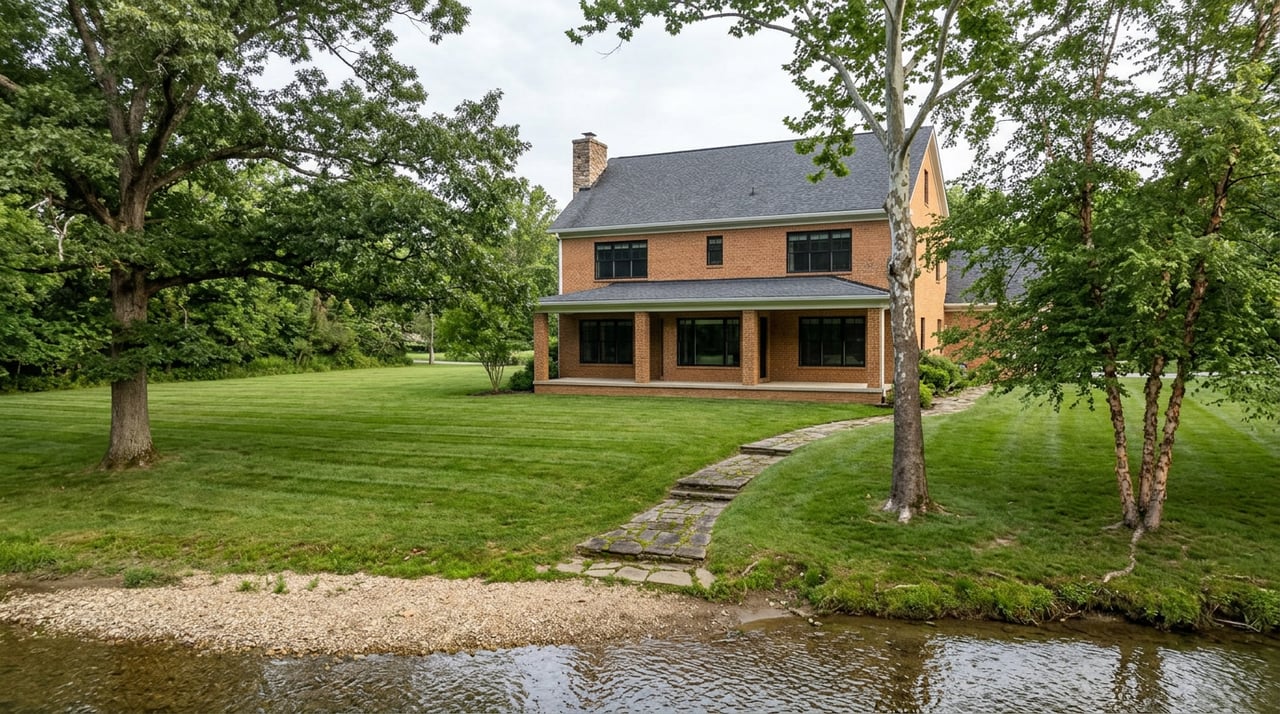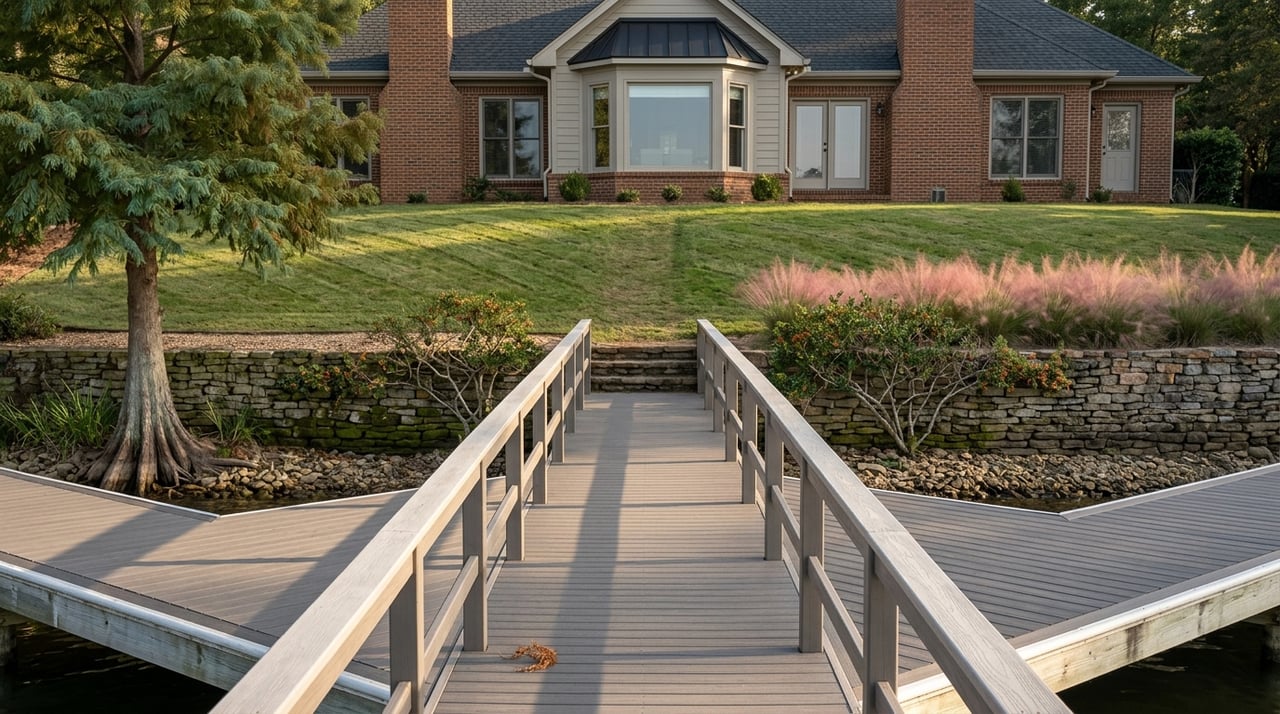
The first clock hangs on nobody's wall. It lives in a recorded phone message and a siren that carries across the water before the water itself starts moving. Call 870-431-5311 on any given morning and you'll hear how many of Bull Shoals Dam's eight generators are running right now, and that single number decides more about the day than the forecast does. Dial it before breakfast and you'll know whether the shoreline in front of your dock is going to be a wide gravel bar or three feet of moving current by lunch.
That's the first clock. There's a second one, slower and less noticed, that governs the lake itself over the course of a year rather than an afternoon. Most people who visit Bull Shoals never learn either exists. Most people who live here run their week by both.
The Schedule Isn't Weather, It's a Notice
Weather gives you days of warning. The Bull Shoals generation schedule gives you hours. New releases are set on a rolling basis: Monday through Thursday, the next day's numbers typically post around 5 p.m. On Friday afternoon, the Army Corps of Engineers posts three days at once, covering Saturday, Sunday, and Monday, because nobody's checking a recording on a holiday weekend.
That cadence changes how people here actually plan. A boat owner in a town with a stable lake decides on Wednesday what Saturday looks like. A boat owner in Bull Shoals decides on Friday evening, after the week's last update lands, and adjusts from there. It's less a forecast than a notice, and the town has quietly organized itself around reading it correctly.
The reason the stakes are worth watching this closely comes down to scale. At the low end, with generators idle, the White River below the dam runs around 250 to 500 cubic feet per second, calm enough to wade. With all eight generators online, releases climb toward 26,400 cfs, each unit pushing roughly 3,300 cfs on its own. That's not a gradual rise. A stretch of gravel bar that was ankle-deep at breakfast can be moving fast and cold by early afternoon, and the only warning most people downstream get is a siren from the dam itself, audible along the near riverfront and fainter the farther downriver you go.
Eight Generators, One Overlook
The dam that sets both numbers sits at the edge of town, and the James A. Gaston Visitor Center perches above it with an observation deck built for exactly this view. Stand there when a unit comes online and you notice it before you understand it: the pitch of the water at the base of the spillway changes almost instantly, and the tailwater below starts to swell.
Guides on the White River build entire trip plans around the low-water windows this schedule creates. Fishing outfits working out of the Bull Shoals area, including operations like Papa Bill's Family Fishing Guide Service and Cox's Guide Service, time trips to the hours when generation is light or off entirely, because that's when wading is safe and the trout hold in predictable water. It's also why a guide's answer to "what time do we start" is rarely a fixed hour. It's whatever the recording said the night before.
The Lake Has a Slower Clock Too
The dam's daily releases aren't the only schedule at work. The Army Corps of Engineers also manages Bull Shoals Lake against a target elevation that shifts through the calendar year, called a rule curve. From January through the end of April, the target sits at 659 feet. It climbs through May, peaks at 662 feet between May 15 and June 15, then eases back down to 661 feet by mid-July, where it holds through most of the summer.
If you remember one number from this before Labor Day passes: the lake's target elevation drops two full feet, from 661 to 659, in the five-week stretch between now and September 30.
That timing surprises people who assume the lake is at its fullest during the busiest part of summer. It isn't. The highest target of the year already came and went in mid-June, a full month before the Fourth of July crowds showed up. What residents are looking at right now, in late August, is already a foot below that spring peak, and the real seasonal drawdown toward winter pool hasn't even started yet. It begins at the end of September, right on schedule, whether or not anyone downstream is paying attention.
Coves and boat ramps that look generous in June start showing more shoreline by October, not because of drought or rainfall, but because the target itself moved. Anyone who's ever wondered why a favorite swimming spot seems to shrink every fall isn't imagining it. It's the rule curve doing exactly what it's designed to do.
A Two-Block Town That Still Argues About Where to Eat
None of this stays confined to the river. Central Boulevard and the short run of Highway 178 through town carry a dining scene built for a place this size, and which restaurant fills up on a given evening often tracks the day's water more closely than the calendar.
On a low-water morning, anglers coming off an early wade trip tend to land at Connie's Cafe or White Sands Cafe for breakfast before the heat sets in. On a high-generation afternoon, when boating and dock time are the better plan, the crowd shifts toward Gaston's White River Resort for a river view with lunch, or the 178 Club, family owned for three decades, for the kind of steak and seafood menu that rewards a slower evening. Bush's Pizza & More and San Juaneros Mexican Restaurant round out the rotation for anyone who just wants dinner without checking a recording first. The Sands has built a following around a chicken parmesan regulars order without looking at the menu.
None of these places are large. That's the point. A town of under two thousand people supports this much variety because the crowd itself splits along the water's schedule, not just the clock on the wall.
The Fall Calendar Bends Around the Same Rhythm
Bull Shoals' biggest gatherings land right where these two clocks intersect. The Big Dam Food Fight, a cooking competition hosted by the local chamber, is set for October 24, 2026, timed for the stretch when the lake has already stepped down toward its winter pool and boat traffic has thinned enough for a downtown event to take over the streets instead. Later in the year, the Light Up the Night Christmas Parade and Christmas on Central fill the same corridor on the first Saturday in December, well after the rule curve has settled at its 659-foot winter target and the daily generation swings that define summer have quieted into a steadier pattern.
Neither event exists because of the dam. Both exist on a calendar the dam helped shape, in a town whose entire layout traces back to the flood-control project that created it in the first place.
Living by Both Clocks
Most lake towns run on one schedule: the weather, checked once in the morning and again before dinner. Bull Shoals runs on two. There's the short one, reset daily or a few times a week, that tells you whether the river in front of your house will be wadeable or fast by afternoon. And there's the long one, reset seasonally, that tells you whether the shoreline you love in June will still look the same by Halloween.
Neither clock asks permission. Both are public information, free to check, and almost entirely invisible to anyone passing through for a weekend. Residents don't think of it as insider knowledge. They think of it as Tuesday.
If you're weighing what it actually feels like to live somewhere the White River and Bull Shoals Lake set the terms of the day, the Buy Feliccia Team spends its time in this exact stretch of the Twin Lakes region and can talk through what that means street by street, cove by cove. Schedule a consultation when you're ready to see it for yourself.